Nigerian church financial management is becoming increasingly complex as churches expand into large, multi-branch organisations with schools, universities, hospitals, media operations, and extensive community infrastructure. The Redeemed Christian Church of God operates over 40,000 parishes across nearly 200 countries. Living Faith Church seats 50,000 worshippers at a single service and runs two universities. The Redemption Camp is a 3,000-acre self-sustaining community with its own electricity grid, banks, and residential estates. Mountain of Fire and Miracles Ministries has grown from a Lagos prayer group to over 300 churches across Nigeria and abroad.
These are institutions of enormous operational complexity. Many run schools and universities alongside their core ministry operations. Others operate hospitals and clinics, while their television and digital platforms reach millions. In addition, construction projects can rival major infrastructure developments. At the same time, welfare programmes distribute funds to thousands of beneficiaries every month. Across multiple cities, countries, and continents, these churches also collect tithes and offerings from large congregations.
Taken together, the scale of what Nigerian churches have built over the last four decades is, by any honest assessment, extraordinary. The financial infrastructure supporting that scale is, in most cases, not.
The Infrastructure Gap Nobody Is Talking About
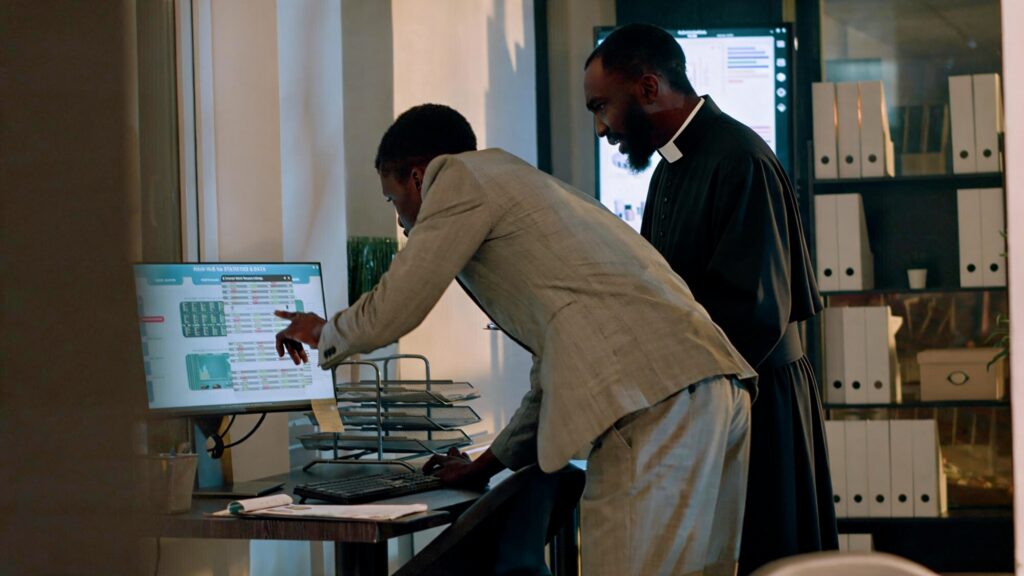
Walk into the finance office of a large Nigerian church, and the challenges of Nigerian church financial management quickly become clear. A small team may manage bank portals, spreadsheets, WhatsApp approvals, and manual reconciliation. Many of these processes were built when the church operated at a much smaller scale.
Collections from Sunday service arrive through cash, bank transfer, USSD, and online platforms simultaneously. Reconciling all of them against each other, and against the expected giving from registered members across multiple branches, takes days. Branch collection reports arrive at central administration at different times, in different formats, and sometimes not at all until someone follows up. Vendor invoices for the construction of a new auditorium wait in an email thread for approval from a senior administrator who is managing forty other priorities simultaneously. The welfare committee disburses funds to hundreds of beneficiaries through individual bank transfers initiated one by one.
By any operational standard, this is a financial management approach that is significantly behind the institutional complexity it is trying to support. The gap between the ambition of Nigerian Christianity and the financial governance infrastructure supporting it is one of the most significant operational challenges in the Nigerian nonprofit and religious sector. It is also one of the least discussed.
Why This Gap Exists and Why It Is Getting Larger
The gap exists for understandable reasons. Most Nigerian churches grew organically and rapidly. As a result, Nigerian church financial management systems that worked for a hundred members had to support a thousand, then ten thousand, and eventually a hundred thousand. A spreadsheet that one administrator could manage soon required three people to maintain. This created version control errors and reconciliation gaps. Nigerian church financial management also became harder to oversee as informal approvals grew more complex. What the senior pastor once handled directly evolved into a chain of authorisations with limited visibility. Growth caused the problem. However, growth also made Nigerian church financial management more urgent. What once seemed like a minor inconvenience can now create serious operational and accountability challenges.
A church that collects NGN 50 million in a single Sunday service, manages construction projects worth hundreds of millions of naira, operates a school with hundreds of students, runs a media ministry that broadcasts to millions, and disburses welfare payments to thousands of beneficiaries every month is not a small organisation running on informal processes. It is an enterprise. And enterprises require enterprise-grade financial infrastructure.
The concept of stewardship, managing resources entrusted to your care with integrity, diligence, and accountability, is not peripheral to the Nigerian church. It is central to its theology and its relationship with the congregation. The infrastructure question is a stewardship question. How can a church fulfil its stewardship obligation to the resources entrusted to it without the systems that make genuine accountability possible?
The answer is that it cannot. Not fully. Not at scale.
What Modern Financial Infrastructure Looks Like for a Nigerian Church
The financial operations of a large Nigerian church have three distinct layers that require different but connected infrastructure.
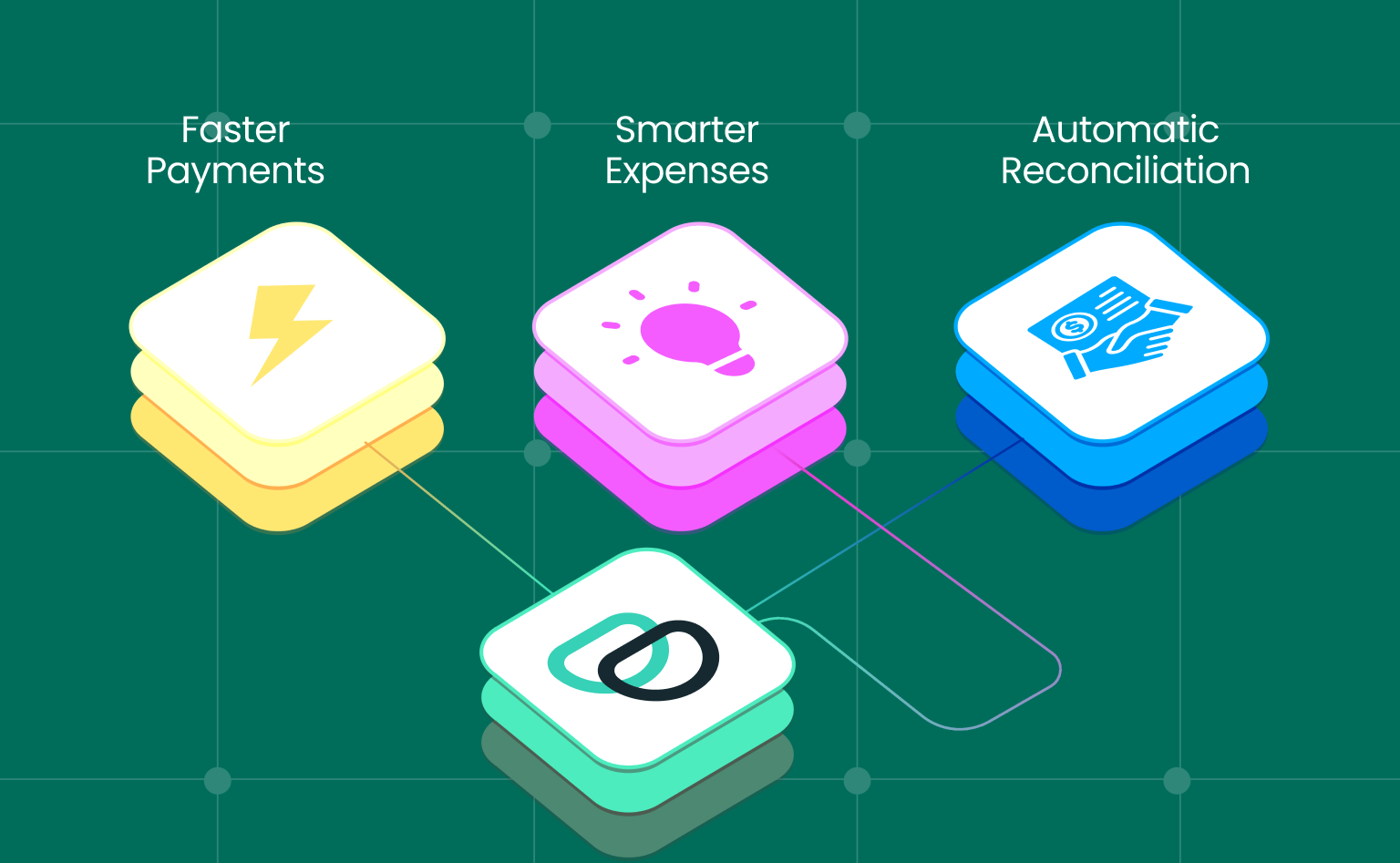
The collections layer. Every tithe, offering, and donation across every branch and channel needs a clear collection process. The church also needs accurate member attribution, reconciliation, and reporting. Virtual accounts can automatically match bank transfers to the correct member. Payment links give members a simple digital giving experience. Real-time collection dashboards give finance administrators a complete view across all branches. They see the data immediately, rather than waiting three days for the final branch report.
The spend management layer. Every vendor payment, contractor invoice, welfare disbursement, staff salary, and operational expense needs a structured approval workflow. The finance team must execute each transaction reliably and maintain a complete audit trail. This requires configurable approval chains that route requests to the correct authoriser automatically. Finance teams also need budget visibility at the point of approval. Bulk payment capabilities allow churches to pay multiple beneficiaries at once. Finally, automatic reconciliation can post each transaction to the church’s accounting records in real time.
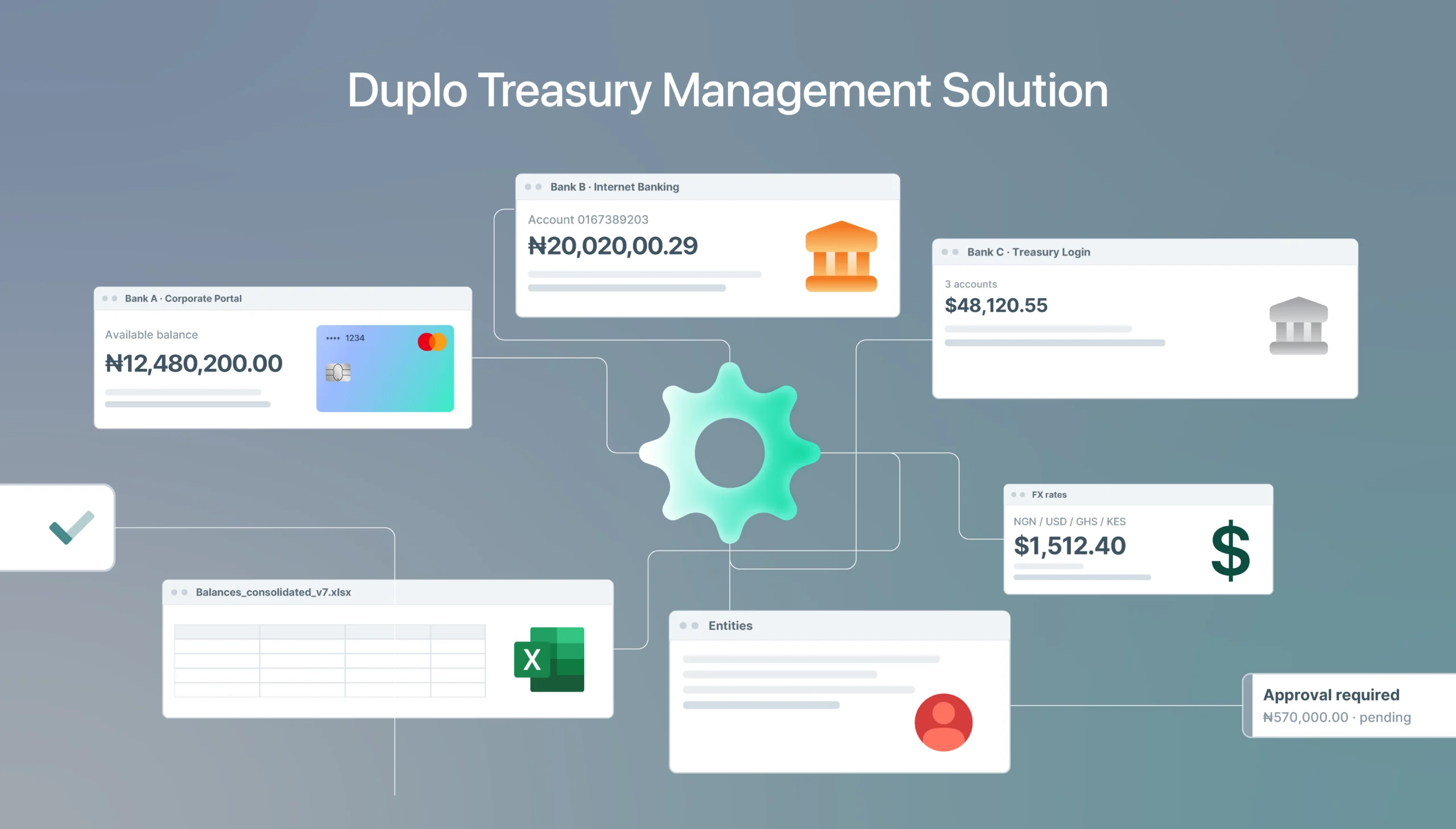
The treasury layer. Every naira in the building fund, education endowment, welfare reserve, and operational accounts should be visible from a single dashboard.
The church’s financial secretary should see the consolidated cash position across all entities and accounts without logging into multiple banking portals. There is no need to manually assemble figures that may already be hours old.
The church also needs automated cash management rules. These rules can maintain minimum balances and consolidate excess liquidity centrally. AI-powered forecasting can then show how major construction projects and large-scale programmes may affect future cash flow. These three layers, collections, spend management, and treasury management, are not separate problems. They are one problem: how does a Nigerian church of significant scale manage its financial operations with the integrity, visibility, and accountability that its stewardship obligations demand?
The Stewardship Argument for Better Financial Infrastructure
There is a theological dimension to this operational conversation that is worth naming directly.
Nigerian Christian theology views stewardship as more than giving. It also calls for the responsible management of what people receive. A church that collects tithes and offerings from a congregation of faithful givers has accepted a stewardship responsibility: to manage those resources with integrity, deploy them purposefully toward the mission of the church, and account for them transparently to the people who gave them.
Manual processes, informal approvals, and fragmented records do not make that stewardship impossible. These processes make financial management harder, slower, and less transparent than it should be. They can also expose the church to reconciliation errors that better systems could prevent. When the finance committee or board of trustees needs documentation, missing audit trails can take weeks to reconstruct. As a result, administrators, treasurers, and finance committee members spend valuable time on manual work that better infrastructure could handle automatically.
Modern financial infrastructure does not replace the human judgment and ethical leadership at the centre of church financial governance. It supports them by giving the church treasurer clean, accurate records to present to church leadership with confidence. Senior pastors gain greater assurance that the church manages its resources with the accountability the congregation deserves. Meanwhile, the finance committee gets the visibility it needs to fulfil its oversight responsibilities without spending days preparing for every meeting.
Better financial infrastructure is not a concession to modernity. It is a stewardship decision.
How Duplo Is Built for Nigerian Churches at Scale
Duplo gives Nigerian churches a single platform that addresses all three layers of financial operations: collections, spend management, and treasury management.
For collections: Virtual accounts eliminate manual reconciliation of bank transfers. Payment links give members a digital giving experience that works across WhatsApp, SMS, and the church website. Real-time collection dashboards show the full picture across all branches simultaneously. NRS-compliant invoicing handles the compliance obligations for churches that are registered entities.
For spend management: Structured approval workflows replace informal WhatsApp and email approvals. Every expense request routes to the correct authoriser automatically, with budget visibility built in. Bulk payments handle welfare disbursements and multi-beneficiary payouts in a single run. Every transaction is documented with a complete, tamper-proof audit trail available on demand.
For treasury management: Duplo Treasury Management connects all bank accounts across every church entity into a single real-time dashboard via NIBSS connectivity. Automated cash sweeping rules maintain minimum balances and consolidate excess liquidity centrally. AI-powered forecasting gives the financial secretary visibility into near-term liquidity needs for construction projects and major programmes. ERP integration with Microsoft Dynamics 365 connects treasury management directly to the church’s financial reporting infrastructure.
The Path Forward
Nigerian churches have built something extraordinary over the last four decades. These include universities, hospitals, media networks, welfare programmes, and worship communities that span the globe.
That ambition deserves financial infrastructure to match. Church administrators need clear visibility without manual work. Treasurers need clean records without reconstructing transactions. Senior pastors need confidence that the church manages its resources with the integrity that stewardship demands.
The infrastructure gap between the scale of Nigerian Christianity and the financial systems supporting it is not inevitable. It is addressable with tools available today. These tools fit the Nigerian operating context and can handle the complexity of large Nigerian churches.
Stewardship is not just about how much the church receives. It is also about how well the church manages those resources. Duplo supports that responsibility with the financial infrastructure churches need to manage funds with greater visibility and control. Start Here!
Frequently Asked Questions
How do large Nigerian churches manage their finances?
Most large Nigerian churches manage financial operations through manual bank portal logins, spreadsheets, informal approval processes, and periodic reconciliation exercises. As these institutions have grown, their financial operations have become more complex. Many now run universities, hospitals, media networks, and welfare programmes. However, their financial infrastructure has not always kept pace. Platforms like Duplo provide connected collections, spend management, and treasury management infrastructure. This helps large Nigerian churches manage their finances at their actual scale.
What financial systems are suitable for Nigerian churches?
The right financial system for a Nigerian church depends on its scale and operational complexity. For churches with multiple branches, high-volume collections, vendor payment obligations, and welfare disbursement programmes, a connected platform that handles collections via virtual accounts and payment links, expense management with structured approval workflows, and treasury management with multi-bank visibility is the appropriate infrastructure. Duplo provides all three within a single platform.
How can Nigerian churches improve financial accountability to their congregations?
Financial accountability requires clean, accurate, and accessible records that can be presented to church leadership and the congregation with confidence. This means structured approval workflows that document every financial decision, automatic reconciliation that matches every transaction to its record in real time, and treasury visibility that shows the complete financial position of the church at any moment. Manual processes and informal approvals create the gaps that undermine accountability. Connected financial infrastructure closes them.
What is stewardship in the context of Nigerian church financial management?
Stewardship in Nigerian Christian theology extends beyond giving to the management of what has been given. A church that collects tithes and offerings from a faithful congregation has accepted a responsibility to manage those resources with integrity, deploy them purposefully toward the church’s mission, and account for them transparently. Modern financial infrastructure supports that stewardship responsibility by providing the visibility, controls, and documentation that genuine accountability requires.
Does Duplo work for churches with multiple branches across Nigeria?
Yes. Duplo’s multi-location capability gives the central church administration a real-time view of collections and spending across all branches simultaneously. Virtual accounts assigned to each branch ensure that bank transfers match the correct branch record automatically. This removes the need for manual investigation. Expense approval workflows reflect the church’s actual authorization structure. Treasury management then provides a consolidated view of all entities and bank accounts from a single dashboard.