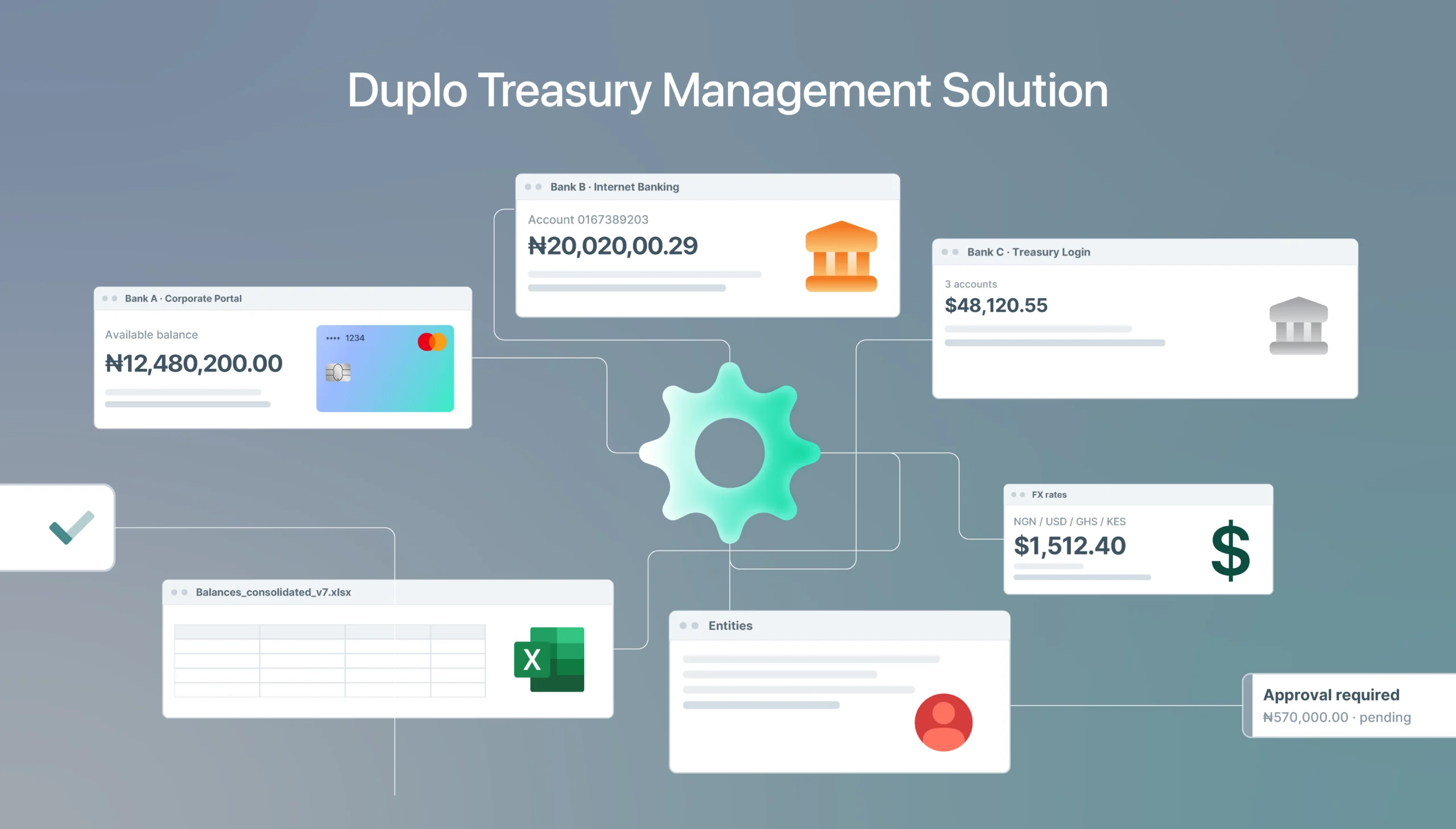
Most Nigerian businesses start with a payment gateway. They need to collect money from customers; a gateway does that, and for a while it is enough. Then the business grows. The vendor payment runs start taking days. Reconciliation at month-end becomes a manual exercise that takes the finance team three days to complete. International supplier payments require logging into a separate banking portal. Expense approvals happen over WhatsApp. And the payment gateway that was sufficient at ten employees is now one of five disconnected tools that a finance team juggles every month without a consolidated view of what has gone out, what has come in, and what the true cash position of the business actually is.
By 2026, the payments sector alone is projected to contribute $6 billion to GDP, with digital payment penetration reaching 82% among the adult population. E-payment transactions hit a record NGN 1.07 quadrillion in 2024, a 79.6% year-on-year increase. Nigerian businesses are moving more money digitally than at any point in history. The question is no longer whether to use digital payment infrastructure. It is whether the infrastructure you are using was built for the scale and complexity of your business today.
This guide helps growing Nigerian businesses understand the difference between a payment gateway and a full business payment platform, when to make the switch, and what to look for when evaluating options.
Payment Gateway vs Payment Platform: What Is the Difference and Why It Matters
The distinction between a payment gateway and a full business payment platform is the most important concept for any growing Nigerian business evaluating its payment infrastructure.
A payment gateway handles the collection side of payments. It connects your business to the payment rails that allow customers to pay you: bank transfers, card payments, USSD, mobile money. The major Nigerian payment gateways, Paystack, Flutterwave, Monnify, and others, do this well. They are the right tool for businesses whose primary payment need is accepting money from customers through a digital channel.
A business payment platform covers the full payment lifecycle: collecting money in, sending money out, managing the currencies in between, and reconciling every transaction automatically. It handles vendor and supplier payments, bulk payouts, international transfers, FX management, expense approvals, and payment collections, all from a single system with a unified view of every naira moving through the business.
The practical difference shows up when a growing business tries to do the following using only a payment gateway:
- Pay 150 vendors this week across multiple banks.
- Convert USD export receipts to pay a USD-denominated supplier without triggering two conversion cycles.
- Get approval for a purchase request before the payment is initiated.
- Reconcile last month’s collections against the corresponding invoices automatically.
- Generate an NRS-compliant e-invoice and collect payment against it from the same system.
A payment gateway cannot do any of these. They require a payment platform.
What Growing Nigerian Businesses Actually Need From Their Payment Infrastructure
The payment needs of a Nigerian business change significantly as it scales. Understanding which stage your business is at helps clarify which infrastructure is right for you right now.
Stage 1: Early stage, under 20 employees.
Primary need is collecting payments from customers reliably and at low cost. A payment gateway is sufficient. The volume of outbound vendor payments is low enough to manage through bank portals manually without significant operational friction.
Stage 2: Growth stage, 20 to 100 employees.
Collections remain important, but outbound payments are growing in volume and complexity. Vendor payment runs are taking meaningful finance team time. Reconciliation is becoming a month-end challenge. International supplier payments are creating FX management questions. A payment gateway no longer covers the full payment need.
Stage 3: Scale stage, 100 employees and above.
Full payment platform required. Multiple vendor relationships across domestic and international markets, multi-currency exposure, bulk payment runs, expense management, approval workflows, and automated reconciliation are all operational necessities, not optional enhancements.
Digital payment platforms currently process almost double the yearly transactions of traditional banks. The businesses driving that volume are not using basic payment gateways for their full payment operation. They have graduated to platforms that handle the complete payment lifecycle.
The Seven Things to Look for in a Business Payment Platform in Nigeria
1. Collections and inbound payment capability.
The platform should support all major Nigerian payment methods for customer collections: bank transfers, card payments, USSD, payment links, and virtual accounts. Settlement should be same-day or next-day on domestic collections.
2. Outbound vendor and supplier payment capability.
The platform should handle domestic NGN vendor payments and international transfers in USD, EUR, and GBP from the same system. Bulk payment runs for multiple vendors simultaneously are essential for any business with a high volume of regular supplier payments.
3. Multi-currency wallet and FX management.
The ability to hold USD, EUR, and GBP balances, pay in foreign currency directly without converting on every transaction, and access competitive FX rates with full cost disclosure before confirmation.
4. NRS-compliant e-invoicing.
From July 2026, medium taxpayers are required to generate and transmit compliant e-invoices through the NRS Merchant Buyer Solution platform. A payment platform that integrates e-invoice generation with payment collection eliminates the need for a separate invoicing tool and ensures every invoice carries a valid Invoice Reference Number automatically.
5. Approval workflows and spend controls.
As businesses grow, payment approvals cannot live in WhatsApp threads and email chains. The platform should support configurable approval workflows where payments above a set threshold route to the correct authorizer automatically, with a full audit trail created at every step.
6. Auto reconciliation and accounting integration.
Every payment collected and every payment made should be automatically matched to its corresponding invoice or purchase order and posted to your accounting system in real time. Integration with QuickBooks, Sage, and Xero should be native, not dependent on a third-party connector.
7. Regulatory compliance credentials.
For Nigerian businesses, the platform must hold CBN licensing for payment services. For international payments, NRS SI and APP licensing is required. PCI DSS certification, ISO certification, and NDPC registration confirm that the platform meets security and data protection standards.
How Duplo Serves as a Complete Business Payment Platform for Nigerian Businesses
Duplo is built for Nigerian businesses that have outgrown a payment gateway and need a platform that handles the full payment lifecycle from a single dashboard.
Collections. Receive payments from customers via bank transfer, payment links, and virtual accounts. Generate NRS-compliant e-invoices directly from the platform and collect against them automatically.
Outbound vendor payments. Pay domestic suppliers in NGN and international vendors in 80+ currencies across 160+ countries. Bulk payment runs for up to 500 recipients at once. Three-way invoice matching before payment release. Real-time delivery confirmation.
Multi-currency wallets. Hold NGN, USD, EUR, and GBP in a single wallet. Pay in foreign currency directly from the relevant balance. Convert with Instant FX Swap at competitive rates with full cost disclosed before confirmation.
Approval workflows and spend controls. Configure multi-level approval chains that match your actual authorization structure. Mobile approvals, escalation rules, and immutable audit trails built in from the start. Budget limits enforced before spending happens.
Auto reconciliation. Every collection and every payment automatically matched to its corresponding invoice or purchase order and posted to QuickBooks, Sage, or Xero in real time. Month-end close becomes a confirmation rather than a reconstruction.
NRS e-invoicing built in. Duplo holds both NRS Systems Integrator and Access Point Provider licenses. Generate and transmit compliant e-invoices directly from the platform, with every invoice automatically carrying a valid IRN.
Frequently Asked Questions
What is the difference between a payment gateway and a payment platform in Nigeria?
A payment gateway handles customer collections: it connects your business to the payment rails that allow customers to pay you via card, bank transfer, or USSD. A business payment platform covers the full payment lifecycle: collecting money in, paying vendors and suppliers out, managing foreign currencies, approving spend, and reconciling every transaction automatically. Growing Nigerian businesses typically need a payment platform, not just a gateway.
What are the best payment platforms for growing Nigerian businesses in 2026?
The right platform depends on your specific payment profile. For businesses that need to handle both collections and outbound vendor payments, manage multi-currency positions, maintain NRS e-invoicing compliance, and reconcile automatically, Duplo is built specifically for that combination of requirements. For businesses whose primary need is customer-facing collections, Paystack and Flutterwave are strong options.
When should a Nigerian business move from a payment gateway to a full payment platform?
The clearest signals are: vendor payment runs are taking meaningful finance team time each week, reconciliation at month-end is a multi-day manual exercise, international supplier payments require a separate banking portal, and expense approvals are happening over WhatsApp or email without a formal audit trail. Any three of these signals together indicate the business has outgrown a basic payment gateway.
Does a business payment platform replace my bank?
No. A payment platform works alongside your existing banking relationships, not instead of them. It adds the payment operations layer that banks do not provide: vendor payment automation, multi-currency management, approval workflows, NRS e-invoicing, and auto reconciliation, connected to the banking infrastructure you already use.
How long does it take to set up a business payment platform in Nigeria?
With Duplo, onboarding is digital and can be completed in days. The platform is designed to be operational quickly, with self-serve configuration that does not require a lengthy implementation project or a professional services engagement.