
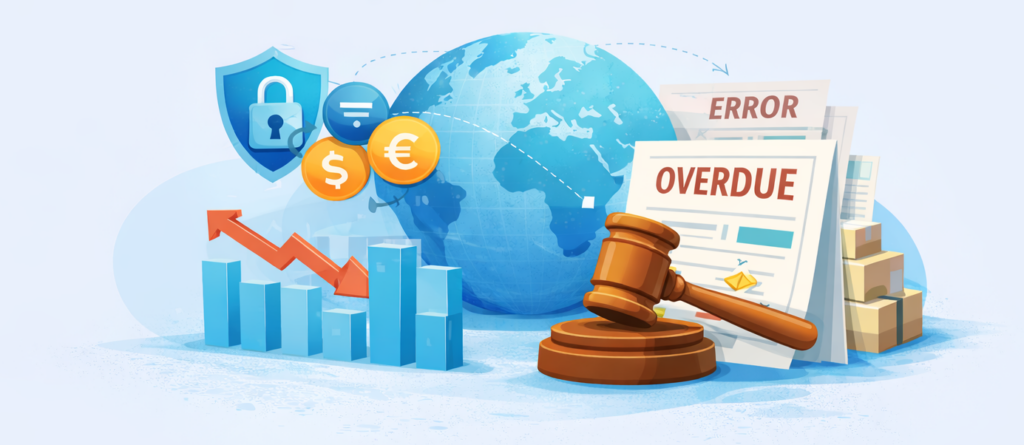
Modern business payments have evolved far beyond simple card swipes and wire transfers. Yet thousands of businesses continue operating with payment systems built for a different era, unaware of the mounting risks beneath the surface. The cost of outdated business payment systems extends far beyond inconvenience, from catastrophic data breaches to failed regulatory audits; these systems can undermine years of growth in a single quarter.
The global transaction value from digital payments reached $11.6 trillion in 2024 and continues accelerating. This explosive growth brings heightened scrutiny from regulators, sophisticated fraud schemes, and rapidly shifting customer expectations.
In this article, we explore the top five hidden risks of outdated business payment systems and how upgrading to modern infrastructure can change the game.
1. Security Vulnerabilities and Rising Fraud Risk
One of the biggest and least obvious dangers of outdated payment systems is security risk.
The average cost of a data breach reached $4.45 million in 2023, with payment card data breaches often exceeding this figure. But the true damage includes destroyed customer trust, mandatory breach notifications, potential lawsuits, and regulatory penalties that can dwarf the initial theft.
Older payment platforms often lack strong fraud protection, advanced encryption, and compliance with modern standards like PCI DSS (Payment Card Industry Data Security Standard). This leaves businesses and customer data exposed to breaches, fraud, and identity theft.
Modern payment ecosystems help mitigate this by:
- Encrypting data end-to-end
- Monitoring transactions in real time
- Using machine learning to detect unusual patterns
- Integrating identity verification
Without these protections, finance teams may suddenly find themselves responding to breaches instead of scaling operations.
2. Inability to Comply with Evolving Regulations
Regulatory pressure around money movement is rising globally. From e-invoicing in Nigeria to enhanced AML and compliance rules worldwide, outdated payment systems are struggling to keep up.
Regulations like PCI DSS (for card payments) and digital tax requirements such as Nigeria’s FIRS e-invoicing push businesses to adopt structured, auditable, and secure payment records. Trying to retrofit compliance onto old systems often results in patchwork solutions that fail to protect your business.
Card networks can fine merchants $5,000 to $100,000 per month for PCI DSS violations, with penalties escalating for continued non-compliance. Payment processors may suspend accounts during investigations, halting your ability to accept payments entirely. Banking relationships deteriorate when financial institutions view non-compliant merchants as high risk, leading to account closures or unfavorable terms.
This is an operational risk, not a tech problem. When your systems can’t produce clean audit trails or enforce controls, the cost of compliance becomes higher, not lower.
3. Slower Cash Flow and Operational Bottlenecks
Legacy systems often require manual reconciliation, slow bank transfers, or batch processing of payments. In a world where business moves at internet speed, delays in clearing funds can directly harm your cash flow, impair supplier relationships, and slow growth.
For forward-looking businesses:
- Integrated business payment platforms accelerate receipt and settlement
- Real-time reporting gives visibility into cash positions
- Automated workflows reduce manual handoffs and errors
If payments take days instead of minutes, you’re losing ground to competitors with modern systems that prioritise speed, reliability, and upfront clarity.
4. Fragmented Data and Poor Financial Visibility
Outdated payment environments usually mean multiple disconnected tools: bank portals, spreadsheets, POS machines, and manual approvals that don’t talk to each other. This siloed approach makes it hard to get a clear picture of where money is, how it’s moving, and what risks might be lurking.
This lack of visibility leads to:
- Inaccurate forecasting
- Missed opportunities
- Compliance challenges
- Slow decision-making
Modern payment infrastructure like Duplo unifies data, so your finance team can see payments, receipts, spend, and forecasts in one place. Good data is the backbone of strategic decisions in 2026.
5. Higher Transaction Costs and Hidden Fees
Legacy payment methods such as traditional bank transfers, checks, or outdated POS systems often come with unexpected costs:
- Slow settlement fees
- Higher transaction processing costs
- Fees for manual reconciliation
- Penalties for failed or delayed payments
Modern payment technology employs retry logic, smart routing, and alternative payment method cascading to maximize authorization rates. Legacy systems simply decline and move on, losing sales that sophisticated technology would have captured. With authorization rates varying by several percentage points between old and new systems, the revenue impact quickly becomes material.
As cross-border commerce grows, this limitation increasingly constrains expansion opportunities. Failing to modernise means your business could be paying more for less, particularly in multi-channel environments.
Beyond Risk: What Success Looks Like in Business Payments
Understanding the risks is only half the battle. The other half is recognzing what modern business payments should actually deliver.
According to leading payment guides, businesses today benefit from:
- Flexible payment methods: Credit/debit cards, bank transfers, mobile wallets, QR codes, and payment links to meet customer expectations.
- Integrated systems: Payment gateways that connect with accounting and ERP systems to reduce manual work.
- Global and local reach: Accepting domestic and international payments without friction.
- Better security and compliance: Protecting against fraud and ensuring adherence to PCI DSS and tax rules.
- Scalability: Payment processing that grows with your business, not against it
These capabilities are table stakes for businesses that want to compete in 2026.
Practical Steps to Modernize Your Business Payments
To get ahead of the risks in 2026, consider:
1. Evaluate Core Needs
List all current payment methods and pain points. Include internal stakeholders from finance, operations, and customer support.
2. Shortlist Modern Platforms
Look for solutions that offer multiple payment methods, analytics, robust security, and integration with your existing systems.
3. Integrate and Automate
Reduce manual workflows by integrating your payment platform with ERP, accounting, and reporting tools.
4. Train Teams
Systems are only as good as the people who use them. Provide training on new tools and compliance processes.
5. Monitor and Improve
Continuously monitor transaction data, security logs, and reconciliation metrics to catch issues early.
The Cost of Inaction in 2026
The risks of outdated business payment systems multiply as technology advances and customer expectations evolve. Security vulnerabilities compound, compliance requirements tighten, hidden costs accumulate, customers defect, and operational inefficiencies widen gaps with competitors.
The question isn’t whether to modernize your payment infrastructure; the question is when you’ll act and whether you’ll do so proactively or in crisis response to a breach or compliance failure.
Payment systems represent critical infrastructure for any business accepting electronic payments. The investment in contemporary payment technology delivers returns through reduced fraud, lower processing costs, higher conversion rates, and operational efficiencies that compound over time. Every day you delay represents another day of unnecessary risk and missed opportunity.
? Ready to modernize your business payments? Duplo offers a secure, compliant payment infrastructure designed for growing businesses. Sign up now, let’s help you eliminate payment risks while improving your bottom line.