Nigeria’s tax landscape is undergoing its most significant transformation in decades. The Federal Inland Revenue Service (FIRS e-invoicing) mandate represents a fundamental shift in how Nigerian businesses document transactions, report taxes, and interact with tax authorities.
For thousands of Nigerian businesses, FIRS e-invoicing is more than just a compliance requirement; it’s a complete reimagining of invoicing operations. Understanding what’s required, who’s affected, and how to comply can mean the difference between smooth operations and costly penalties.
This comprehensive guide breaks down everything Nigerian businesses need to know about FIRS e-invoicing compliance in 2026, and how Duplo makes compliance simple.
What is FIRS e-Invoicing?
FIRS e-invoicing is Nigeria’s mandatory digital invoicing system requiring businesses to generate, validate, and transmit invoices electronically through the Federal Inland Revenue Service’s Merchant-Buyer Solution (FIRSMBS) platform.
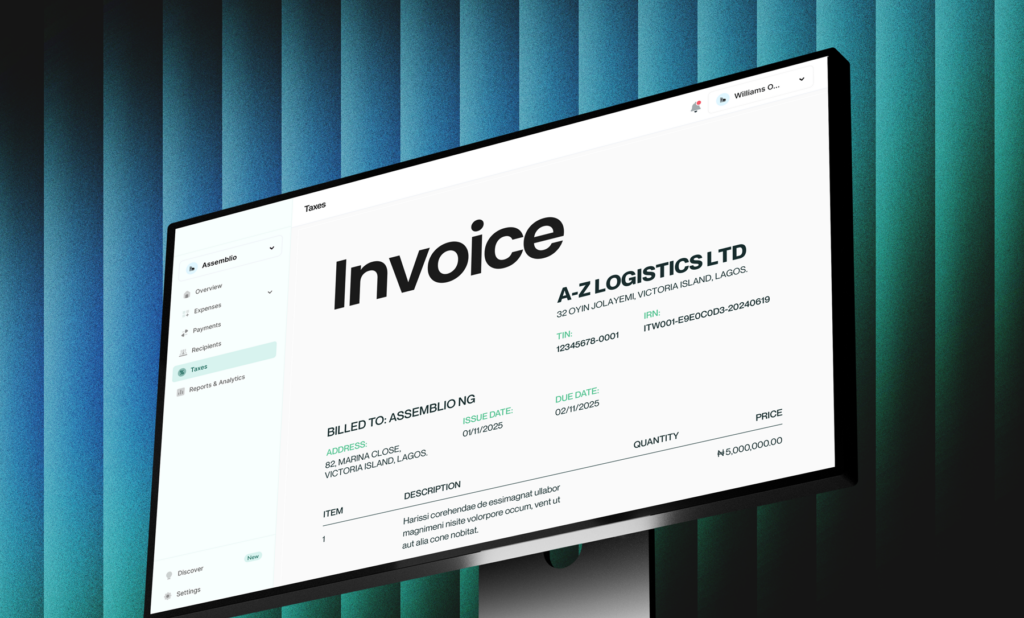
Under this system, invoices are no longer just documents exchanged between a seller and a buyer; each invoice must be validated through FIRSMBS and issued with official identifiers confirming compliance.
Every approved invoice includes:
- An Invoice Reference Number (IRN)
- A cryptographic stamp issued by FIRS
- A QR code that allows the invoice to be verified
These elements make each invoice traceable, verifiable, and auditable. The broader goal is to give the FIRS greater visibility into taxable transactions and to create a single, standard framework for invoicing across industries.
Why FIRS Introduced e-Invoicing
FIRS e-Invoicing is part of Nigeria’s wider move toward automated tax administration.
Historically, invoicing practices varied widely across businesses. Manual processes, inconsistent formats, and delayed reporting made it difficult to track taxable activity in real time accurately.
By introducing e-Invoicing, FIRS aims to:
- Reduce fake or manipulated invoices
- Improve VAT and withholding tax reporting.
- Increase transparency in business transactions.
- Enable faster audits and compliance checks.
For businesses, this also means fewer disputes over invoice authenticity and clearer audit records.
Legislative Authority Behind FIRS e-Invoicing
FIRS e-invoicing derives its legal authority from multiple legislative sources:
FIRS Establishment Act 2007: Section 25 grants FIRS authority to administer all taxation laws and implement systems for efficient tax collection and oversight.
Value Added Tax Act: Provides the framework for VAT administration and compliance, which FIRS e-invoicing helps enforce.
Nigerian Tax Administration Bill (NTAB): Section 103 imposes penalties of ₦1 million for the first day of noncompliance with FIRS technology deployment, plus ₦10,000 for each subsequent day. Section 104 stipulates that failure to process taxable supplies through the system results in a ₦200,000 administrative penalty, plus 100% of the tax due, with additional interest at 2% above CBN’s monetary policy rate.
This strong legislative backing ensures FIRS e-invoicing is mandatory, with significant penalties for noncompliance.
Who Does FIRS e-Invoicing Affect?
FIRS e-invoicing follows a phased implementation approach targeting different business categories at different times:
Phase 1: Large Taxpayers (Extended to November 1, 2025)
Originally scheduled for August 1, 2025, FIRS granted a three-month extension to November 1, 2025, for large taxpayers to allow proper onboarding and system integration.
Who qualifies as a large taxpayer:
- Businesses with an annual turnover of ₦5 billion or more
- Taxpayers registered with the FIRS Large Tax Office (LTO) network
- Companies that participated in the November 2024 pilot phase
Phase 2: Medium and Small Enterprises (January 1, 2026)
All remaining VAT-registered businesses, including medium and small enterprises, must comply with FIRS e-invoicing from January 1, 2026.
Phase 3: Non-Resident Companies (Expected 2026)
Non-resident companies with taxable supplies in Nigeria are expected to be included in the mandate in 2026, though specific dates are pending official confirmation.
Exemptions: Businesses below the turnover thresholds are currently exempt but encouraged to begin early preparation, as requirements may expand.
Transaction Types Covered by FIRS e-Invoicing
FIRS e-invoicing applies to different transaction types with varying compliance models:
Business-to-Business (B2B) and Business-to-Government (B2G)
Compliance Model: Pre-clearance (mandatory validation before issuance)
Requirements:
- The invoice must be submitted to FIRS for validation before being sent to the buyer
- Must receive Invoice Reference Number (IRN) and CSID from FIRS
- Both parties must use validated invoices for tax deduction claims
- Non-compliant invoices risk rejection of input VAT claims
Business-to-Consumer (B2C)
Compliance Model: Post-reporting for transactions exceeding ₦50,000
Requirements:
- Invoice details must be reported to FIRSMBS within 24 hours of issuance
- FIRS returns a QR-coded CSID for the transaction
- Real-time reporting framework ensures high-value retail transactions are captured for accurate VAT calculations
Cross-Border Transactions
Since February 1, 2022, all import and export transactions have required electronic invoices, verified by authorized banks and submitted via the Central Bank of Nigeria’s Trade Monitoring System (TRMS).
The Challenge: Complex Technical Requirements
Implementing FIRS e-invoicing traditionally requires meeting specific technical standards that create significant barriers for most businesses
Technical Requirements Include:
- Invoice Format: XML or JSON following UBL 3.0 standard
- Mandatory Fields: 55 required data fields across eight categories
- Digital Signatures: ECDSA algorithm implementation
- Security: OAuth 2.0 authentication, TLS 1.3 encryption, AES-256 data protection
- Integration: RESTful API connections to FIRS systems
- Compliance: NITDA accreditation requirements
These complexities are why most businesses should not attempt to build and maintain direct FIRS integrations themselves.
How to Comply Without Building Direct FIRS Integrations
The good news is, FIRS allows businesses to work through certified Access Point Providers. These platforms are approved to connect to the FIRS e-Invoicing system on behalf of businesses.
Using an access platform means:
- No need to build or maintain FIRS integrations
- Automatic validation and submission
- Built-in compliance with security and data residency rules
- Centralized tracking and reporting
This approach significantly lowers the barrier to compliance and reduces operational risk.
The Duplo Solution: FIRS e-Invoicing Made Simple
Duplo is a NITDA-accredited Access Point Provider for FIRS e-invoicing, which means we handle all the technical complexity so you don’t have to, embedding compliance directly into everyday invoicing workflows.
How Duplo Works
Instead of building your own integration or hiring developers, you simply:
1. Sign Up on Duplo: Register your business on the Duplo platform with your business details and TIN. We handle the FIRS registration process for you.
2. Create or Upload Invoices: Create invoices directly in Duplo’s simple interface, or upload existing invoices. Our system automatically validates all mandatory fields.
3. Submit to FIRS: Click one button. Duplo handles validation, digital signing, submission to FIRS, and retrieval of your IRN and cryptographic stamp.
4. Download & Send: Receive your FIRS-approved invoice with QR code and cryptographic stamp. Download the PDF and send it to your customer, all from one platform!
The 72-Hour Buyer Review Window
One of the most important changes introduced by FIRS e-Invoicing is the buyer review window.
After an invoice is issued, the buyer has 72 hours to review it. During this period, the buyer can accept or reject the invoice.
If the buyer disputes or rejects the invoice, the supplier must log the action and either correct or cancel the invoice. Once the 72-hour window expires, the invoice becomes final and can no longer be modified.
This step introduces accountability on both sides of the transaction and helps prevent disputes long after invoices have been issued.
Conclusion: The Time to Prepare Is Now
FIRS e-invoicing represents Nigeria’s commitment to tax modernization, transparency, and digital transformation. With the January 1, 2026 deadline for medium and small enterprises approaching, businesses must act now to ensure compliance readiness.
The transition from manual or simple digital invoicing to structured, validated FIRS e-invoicing requires investment in systems, processes, and capabilities. However, businesses that prepare proactively will find the transition smoother and may discover operational benefits beyond mere compliance.
FIRS e-invoicing is an opportunity to modernize financial operations, improve accuracy, and build infrastructure for sustainable business growth in Nigeria’s evolving digital economy.
? Ready to simplify your FIRS e-invoicing compliance? Sign up on Duplo today or book a demo to see how easy compliance can be.
Disclaimer: Information in this guide reflects current understanding of FIRS e-invoicing requirements as of late 2025/early 2026. Regulations, technical specifications, and implementation timelines may change. Always verify current requirements directly with FIRS. Duplo maintains NITDA accreditation and stays current with all regulatory changes to ensure customer compliance.