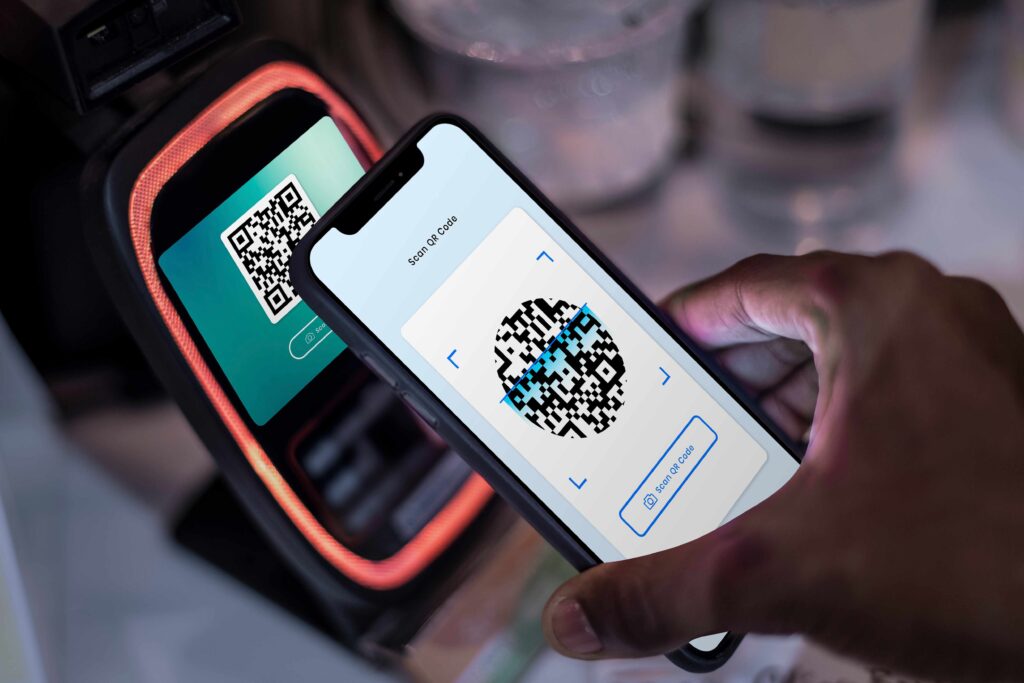
Nigeria processed ₦285 trillion in electronic payments in Q1 2025 alone, a 24.4% year-on-year increase, and now ranks among the world’s leading real-time payment economies alongside India, Brazil, and China. Behind every one of those transactions sits a payment gateway.
If you run a business in Nigeria and accept payments digitally, a payment gateway is the infrastructure making it possible. Yet most explanations of what a payment gateway is were written for US or European e-commerce merchants and leave out the details that matter most in the Nigerian context: NIBSS, virtual accounts, the National Payment Stack, CBN licensing, and the compliance requirements that come with accepting money locally.
This guide explains what a payment gateway is, how it works step by step, the types available in Nigeria, and what Nigerian businesses need that no global guide covers.
What Is a Payment Gateway?
A payment gateway is the technology layer that sits between your business and the financial system. When a customer initiates a payment, the gateway captures the payment details, encrypts and transmits them to the relevant banking or processing network, receives an approval or decline decision, and reports the outcome back to both the business and the customer.
In a physical store, this function is performed by a card terminal. In an online or B2B environment, the payment gateway performs the same function digitally, handling cards, bank transfers, USSD, and virtual account payments depending on how the customer chooses to pay.
A payment gateway is not the same as a payment processor, though most Nigerian providers bundle both. The gateway captures and secures payment data. The processor routes the authorisation between banks. In practice, most Nigerian payment platforms handle both functions under one integration, so the distinction matters most in enterprise or custom-build contexts.
How a Payment Gateway Works: Step by Step
When a payment is initiated through a gateway, the following sequence occurs, typically in under three seconds:
Step 1: Initiation. The customer enters payment details on your checkout page, invoice portal, or payment link.
Step 2: Encryption. The gateway encrypts the data using TLS before it leaves the customer’s environment, protecting it from interception in transit.
Step 3: Authorisation request. The encrypted data is transmitted to the payment processor, which forwards an authorisation request to the customer’s bank or card issuer.
Step 4: Bank verification. The issuing bank checks for available funds, validates the transaction against fraud rules, and returns an approval or decline.
Step 5: Response. The approval or decline flows back through the processor to the gateway, which notifies both the business and the customer instantly.
Step 6: Settlement. Approved transactions are batched and settled, with funds moving from the customer’s bank through the acquiring bank into the merchant’s account. Nigeria’s National Payment Stack, launched in November 2025, now enables settlement in milliseconds for supported corridors, replacing the legacy NIBSS Instant Payments system.
Step 7: Reconciliation. In a B2B context, there is almost always a seventh step: matching the incoming payment to the correct invoice. A payment gateway with virtual accounts handles this automatically the moment funds arrive.
The Four Types of Payment Gateway Available in Nigeria
1. Hosted Payment Gateway
The customer is redirected to a third-party payment page to complete their transaction. The gateway provider handles all security and PCI-DSS compliance. Easiest to set up, but the customer leaves your environment to pay. Best for: businesses with limited technical resources that need to start accepting payments quickly.
2. API-Integrated Payment Gateway
The gateway is embedded directly into your platform via API. The customer never leaves your environment. Full control over the checkout experience, with compliance responsibilities shared between the gateway and the merchant. Best for: businesses with development resources that want a fully branded payment experience.
3. Payment Links and Virtual Accounts
A hybrid approach particularly suited to Nigerian B2B payments. The gateway generates a unique payment link or virtual account number tied to a specific invoice or client. The customer pays via bank transfer to that account. The payment is automatically attributed on arrival, with no checkout page required on the customer’s side.
This is the most practical approach for Nigerian B2B businesses because bank transfers are the dominant payment method for business transactions in Nigeria, accounting for 82.1% of all cashless transactions processed through NIBSS.
4. Self-Hosted Gateway
The merchant collects payment data on their own server and transmits it to the gateway. Maximum control, highest PCI-DSS compliance burden. Suitable only for large enterprises with dedicated technical and security resources.
Payment Methods a Nigerian Gateway Must Support
A payment gateway that only supports cards is immediately limited for Nigerian businesses. The full payment method landscape includes:
| Payment Method | Nigerian Relevance | Notes |
|---|---|---|
| Bank transfer (NPS/NIBSS) | Primary | 82.1% of all cashless transactions in Nigeria |
| Virtual accounts | High | Enables automatic invoice reconciliation |
| Cards (Visa, Mastercard, Verve) | Secondary | Used for smaller and consumer transactions |
| USSD | Moderate | Accessible without smartphones or internet |
| Mobile money (OPay, PalmPay) | Growing | Accounts for 7% of digital payments |
| Payment links | Growing | Invoice-linked payments without integration needed |
The right payment gateway for your Nigerian business supports all the methods your customers actually use, not just the ones that are easiest to implement.
What Is NIBSS and Why Does It Matter for Nigerian Payment Gateways?
NIBSS (Nigeria Inter-Bank Settlement System) is the infrastructure layer that enables real-time electronic transfers between Nigerian banks. It is the backbone of Nigerian digital payments.
In November 2025, Nigeria launched the National Payment Stack (NPS), replacing the legacy NIBSS Instant Payments (NIP) system with a unified infrastructure that connects banks, fintechs, and mobile money operators for near-instant settlement. The first live NPS transaction completed in milliseconds.
For businesses choosing a payment gateway, the quality of a provider’s NPS integration directly determines reliability for bank transfer collections. A gateway routing Nigerian payments through international intermediaries rather than direct NPS integration will consistently experience higher latency and failure rates than one with native Nigerian infrastructure.
What Nigerian Businesses Need That Global Payment Gateway Guides Miss
Most “what is a payment gateway” guides are written for Shopify merchants in the US or UK. Here is what they consistently leave out:
NRS e-invoicing compliance. From 2025 onward, Nigerian businesses must issue and receive invoices validated through the NRS Merchant Buyer Solution platform. A payment gateway that does not integrate with this system means managing e-invoicing compliance as a separate workflow. Invoices without a valid NRS Invoice Reference Number cannot be used to recover input VAT. Read the full NRS e-invoicing compliance guide here.
CBN licensing is non-negotiable. Any payment gateway operating in Nigeria must hold a valid Central Bank of Nigeria licence. Using an unlicensed gateway exposes your business to regulatory consequences, including transaction freezes and penalties. Always verify CBN licensing before signing up with any provider.
Virtual accounts are infrastructure, not a feature. In Nigerian B2B payments, virtual accounts are the primary tool for automated reconciliation. A gateway without virtual account functionality means your finance team manually matches every incoming bank transfer to an invoice. At scale, that is thousands of hours per year in avoidable labour.
The National Payment Stack changes settlement timelines. Nigeria’s new NPS infrastructure enables near-instant settlement for supported payment corridors. If your current gateway is not NPS-integrated, you may be operating on slower NIBSS NIP timelines when faster alternatives exist.
How to Choose the Right Payment Gateway for Your Nigerian Business
Use this framework:
1. Match payment methods to your customers. If your buyers pay via bank transfer, you need virtual accounts. If they pay via card, you need card processing. If they pay via USSD, you need USSD support. Do not choose a gateway based on what it offers. Choose based on how your customers actually pay.
2. Verify CBN licensing. Ask for the licence number and category before signing up. Cross-reference with the CBN’s published register.
3. Check NPS/NIBSS integration quality. Ask your provider what percentage of local bank transfer transactions succeed on first attempt. Any provider that cannot answer this question is not measuring it.
4. Assess reconciliation capability. Does the gateway offer virtual accounts? Does it push reconciled data to your accounting system automatically? If not, factor in the manual labour cost.
5. Confirm NRS e-invoicing compatibility. For Nigerian businesses in Phase 1 or Phase 2 of the NRS rollout, this is not optional.
Frequently Asked Questions: Payment Gateways in Nigeria
Do I need a payment gateway to accept bank transfers in Nigeria? Yes, if you want payments matched to invoices automatically. Without a payment gateway, bank transfers arrive in your account with limited context, requiring manual matching. A gateway with virtual accounts attributes every payment the moment it arrives.
What is the difference between a payment gateway and a POS terminal? A POS terminal is a physical device for in-person card payments. A payment gateway is software infrastructure for online, mobile, and B2B payments. Both authorise transactions but through different interfaces and for different use cases.
Is Paystack a payment gateway? Yes. Paystack is a payment gateway and processor, primarily built for consumer-facing businesses and e-commerce. For B2B-specific requirements like virtual accounts, approval workflows, and automated reconciliation, a B2B payment platform like Duplo is more appropriate.
What replaced NIBSS in Nigeria? Nigeria launched the National Payment Stack (NPS) in November 2025 to replace the NIBSS Instant Payments (NIP) system. The NPS connects banks, fintechs, and mobile money operators for near-instant settlement and is designed to scale with Nigeria’s growing digital payment volumes.
How do I verify if a Nigerian payment gateway is CBN licensed? Ask the provider directly for their CBN licence number and category. You can also check the CBN’s publicly available register of licensed payment service providers on the CBN website.
How Duplo Fits Into the Nigerian Payment Gateway Landscape
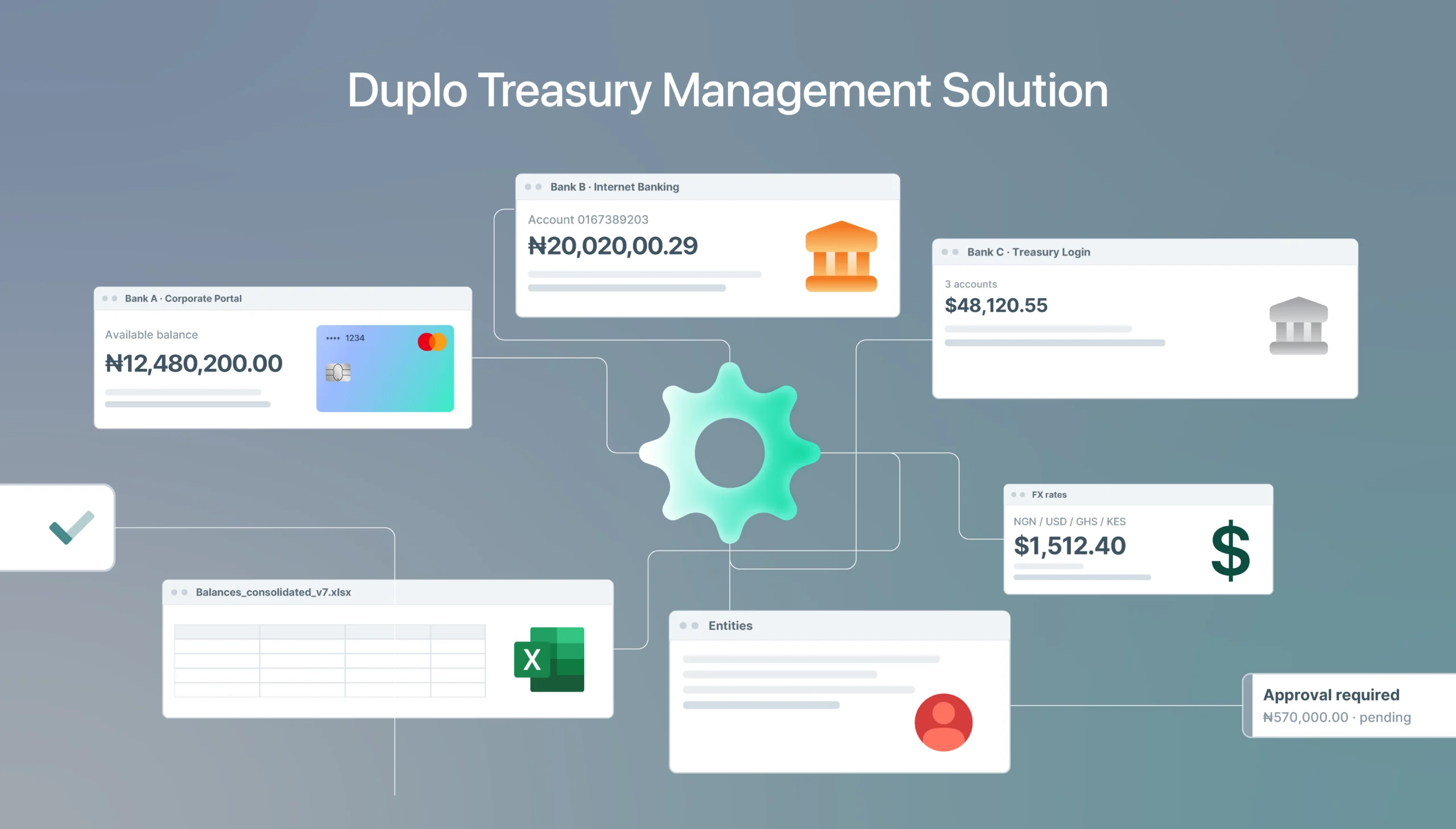
Duplo is a B2B payment infrastructure platform built specifically for Nigerian and African businesses. It combines payment gateway functionality with virtual account collections, automated reconciliation, multi-currency payments across 80+ currencies in 160+ countries, and NRS e-invoicing compliance in a single integrated system.
For businesses that need more than a checkout page, Duplo provides the full payment infrastructure layer: from the moment a customer initiates payment to the moment it is reconciled in your accounts and validated for tax compliance.
CBN licensed. NRS e-invoicing compliant. Built on Nigerian infrastructure.
➡️ Ready to see how a payment gateway built for Nigerian business works? Book a demo here to get started with Duplo.
Last updated: May 2026. Nigerian payment infrastructure, CBN regulations, and NRS e-invoicing requirements change. Verify current details with your provider and from official CBN and NRS sources.