
For many finance teams, bulk payments are where operations start to feel heavy. The monthly payment run represents one of the most time-consuming and error-prone tasks on the calendar.
What should be simple, paying multiple vendors, employees, or partners, quickly becomes a mix of spreadsheets, approvals, uploads, and last-minute corrections. Paying 50, 100, or 500 vendors individually through traditional banking channels can consume entire workdays while introducing countless opportunities for mistakes, delays, and frustrated suppliers.
And as businesses grow, this process doesn’t just get bigger. It gets riskier. Bulk payments are not just about sending money. They are about speed, accuracy, control, and visibility, all at once.
And when any of those break, the impact is immediate.
What Are Bulk Payments?
Bulk payments (also called mass payouts or batch transfers) allow businesses to send money to multiple recipients in a single action instead of processing each payment individually.
Typically, finance teams prepare a list of recipients with payment details, upload it into a system, and process all payments at once.
This is commonly used for:
- Vendor and supplier payments
- Payroll and contractor payouts
- Customer refunds
- Commissions and incentives
Instead of initiating hundreds of transactions manually, bulk payments consolidate everything into one streamlined workflow.
Why Bulk Payments Matter for Growing Businesses
Bulk payments are no longer a “nice to have.” They are essential infrastructure for businesses operating at scale.
As transaction volumes increase, handling payments one by one becomes inefficient and unsustainable. Bulk payment systems allow businesses to process thousands of payments at once without increasing operational effort.
The benefits are clear:
1. Speed and Efficiency
Bulk payments reduce hours of manual work into a single action, allowing teams to process large volumes quickly.
2. Cost Savings
By consolidating transactions, businesses reduce per-payment fees and administrative overhead.
3. Fewer Errors
Automation minimizes manual input, reducing mistakes that can lead to failed or duplicate payments.
4. Better Cash Flow Visibility
Bulk payment systems provide a clearer view of outgoing payments, helping finance teams plan and manage liquidity.
5. Scalability
As businesses grow, bulk payments handle increased volume without requiring additional resources or headcount.
Why Nigeria Businesses Need Bulk Payments
Businesses operating across Nigeria deal with fragmented banking infrastructure, multiple currencies, varied payment method preferences, and regulatory complexity that multiplies with each new market.
A Nigerian manufacturing company paying suppliers across Ghana, Kenya, and South Nigeria faces logistical challenges that don’t exist in more integrated markets. Different banks, currency conversion requirements, mobile money integration for smaller vendors, varying KYC standards, and distinct regulatory frameworks turn what should be simple vendor payments into administrative nightmares.
Bulk payment platforms designed for Nigerian markets solve these problems by:
Unifying Multiple Payment Methods:
Send payments via bank transfers, mobile money (M-Pesa, MTN MoMo, Airtel Money), card disbursements, and agent networks through a single interface rather than managing separate systems for each channel.
Managing Multi-Currency Complexity:
Handle payments in NGN, KES, GHS, ZAR, USD, and other currencies without manually calculating conversions or managing multiple currency accounts. Platforms with transparent FX pricing, like Duplo, eliminate hidden margins that traditional banks embed in cross-border transactions.
Automating Compliance Requirements:
Navigate different regulatory frameworks across jurisdictions with built-in compliance checks, automated tax withholding where required, and audit trails that satisfy regulators in multiple countries simultaneously.
Providing Real-Time Visibility:
Track payment status across all recipients and channels from a single dashboard, eliminating the need to check multiple bank portals, mobile money platforms, and agent confirmations manually.
The Reality: Why Bulk Payments Still Feel Broken
Despite these advantages, many businesses still struggle with bulk payments.
That’s because most systems were not designed for how modern finance teams operate.
In practice, bulk payments often look like this:
- Payment data lives in spreadsheets
- Teams upload CSV files into banking portals
- Approvals happen outside the system
- Errors are only discovered after submission
- Reconciliation happens manually
This approach works at small scale. But as volumes grow, the cracks start to show.
Common Challenges Businesses Face
1. Spreadsheet Dependency
Many systems still rely on file uploads, which introduce version control issues, formatting errors, and manual corrections.
2. Limited Flexibility
Traditional batch systems often require similar payment types, currencies, or schedules, making them rigid and difficult to adapt.
3. Delayed Processing
Payments routed through legacy systems can take time, especially for cross-border transactions.
4. Fragmented Workflows
Finance teams often switch between tools for approvals, payments, and reporting, creating inefficiencies.
5. Compliance and Regional Complexity
In Nigeria, businesses must deal with multiple payment methods, currencies, and regulatory environments, adding another layer of complexity.
What Modern Bulk Payments Should Look Like
Bulk payments should not feel like a workaround. They should feel like a core part of your financial system.
A modern bulk payment solution should offer:
1. One-Step Payment Execution
Upload or trigger multiple payments and process them in a single, seamless flow.
2. Built-In Approvals
Approvals should be part of the workflow, not handled externally through email or chat.
3. Real-Time Visibility
Finance teams should be able to track:
- Payment status
- Approval stages
- Completed transactions
Without switching tools.
4. Automated Validation
Errors should be caught before payments are sent, not after.
5. Easy Reconciliation
Payments should automatically sync with financial records, reducing manual work.
6. Flexible Payment Options
Support for multiple currencies and payout methods across markets.
The Gap Most Providers Miss
Most bulk payment solutions focus on sending money faster.
But speed alone is not enough.
The real problem is everything around the payment:
- Approvals
- Visibility
- Reconciliation
- Compliance
This is the gap.
Businesses don’t just need a faster way to send payments. They need a system that keeps them in control before, during, and after money moves.
How Duplo Simplifies Bulk Payments for Nigerian Businesses
Duplo provides comprehensive bulk payment capabilities designed specifically for businesses operating across Nigerian markets. Our platform addresses the unique challenges CFOs face when managing high-volume payments across fragmented infrastructure:
Multi-Method Payment Support: Send payments via bank transfers, mobile money (M-Pesa, MTN MoMo, Airtel Money), and agent networks from a single platform. Recipients receive funds through their preferred method without you managing multiple systems.
True Multi-Currency Operations: Hold balances and execute payments in NGN, USD, GBP, EUR, and other currencies with transparent, institutional-grade FX rates. No hidden margins or surprise conversions.
Integrated Compliance: Built-in tax withholding where required, automated KYC verification, and compliance with regulatory frameworks across operating jurisdictions. Every transaction maintains complete audit trails for internal and external reviews.
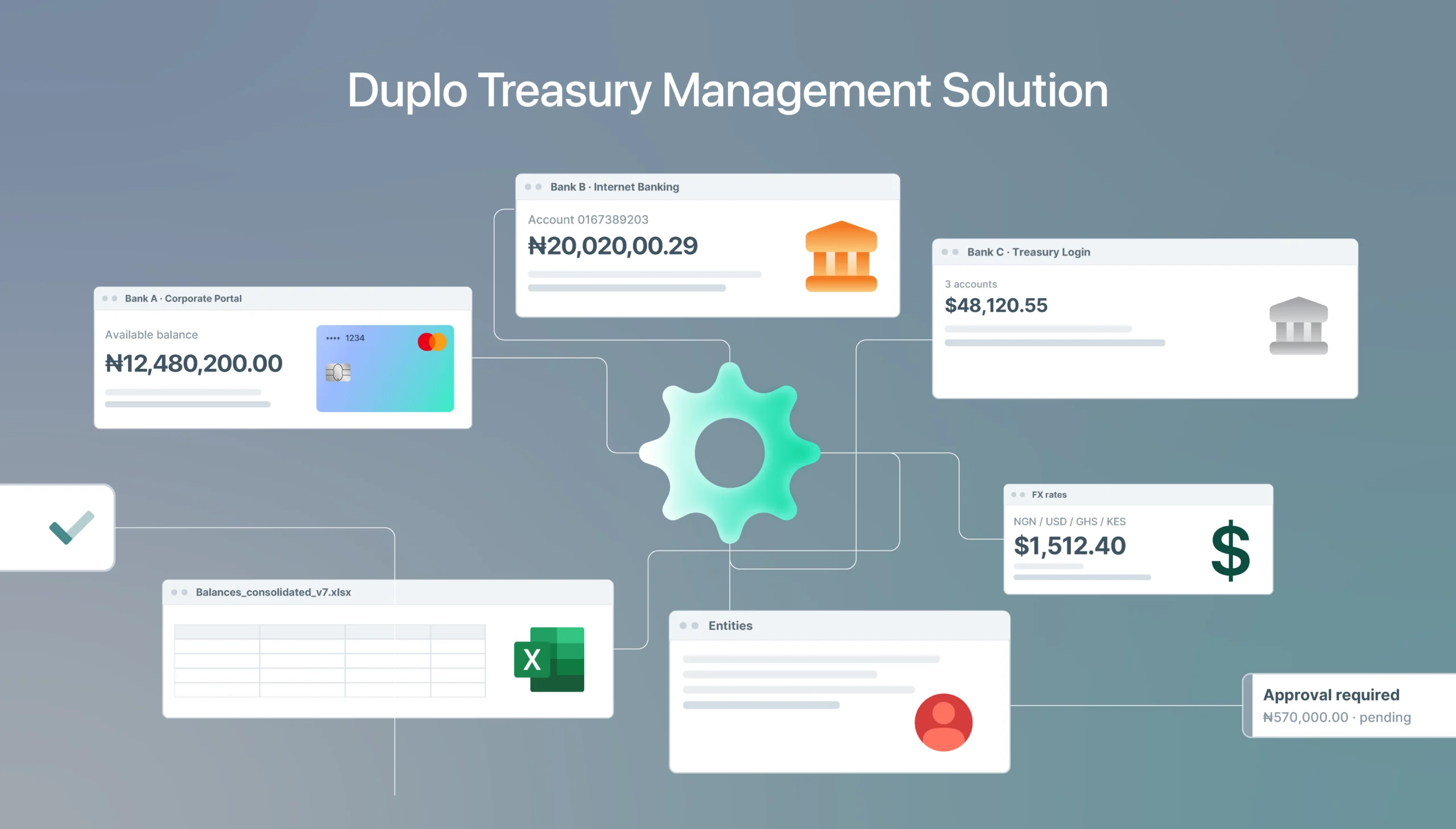
Powerful Approval Workflows: Configure multi-level approvals based on amount thresholds, payment categories, or departments. Enforce segregation of duties while maintaining operational efficiency.
Deep ERP Integration: Connect directly with QuickBooks, Xero, SAP, or custom systems through pre-built plugins or robust APIs. Export approved invoices, execute payments, and sync confirmations without manual data entry.
Real-Time Visibility: Track every payment from initiation to settlement through a unified dashboard. Instant notifications on status changes keep you informed without constant checking.
Companies using Duplo for bulk payments report 85-90% reductions in payment processing time, 70-80% cost savings versus traditional banking, zero payment errors after proper file validation, and dramatically improved vendor relationships through reliable, timely payments.
Bulk Payments, But With Control
The goal is not just to pay faster. It is to pay:
- Accurately
- Consistently
- With full visibility
Because once money moves, it’s already too late to fix mistakes.
Modern finance teams need to stay in control before that happens.
Final Thoughts
Bulk payments are no longer just a finance function; they are a core part of how businesses operate at scale. As companies grow across markets, manage more vendors, and handle larger transaction volumes, their payment systems must evolve with them.
If your bulk payment process still relies on spreadsheets, manual approvals, and fragmented tools, the problem is not the volume; it is the system. Duplo helps Nigerian businesses process vendor payments 90% faster at 80% lower cost while maintaining complete control.
? Ready to simplify your bulk payments and stay in control? Book a demo to see how we can transform your financial operations.